




CERN researchers just achieved something that could make today’s cybersecurity measures look like medieval castle walls against modern artillery. The European Organization for Nuclear Research successfully demonstrated quantum internet technology that can detect any attempt at data interception with unprecedented precision, marking a pivotal moment in the evolution of secure communications.
The breakthrough leverages quantum entanglement – a phenomenon where particles remain mysteriously connected across vast distances. When hackers attempt to intercept quantum-encrypted data, the very act of observation changes the quantum state of the particles, immediately alerting both sender and receiver to the security breach. This creates an essentially unbreakable communication channel that could transform everything from banking to military communications.

The Quantum Leap in Security Technology
CERN’s quantum internet tests represent the most advanced implementation of quantum key distribution (QKD) technology to date. Unlike traditional encryption methods that rely on mathematical complexity, quantum encryption exploits fundamental laws of physics to guarantee security.
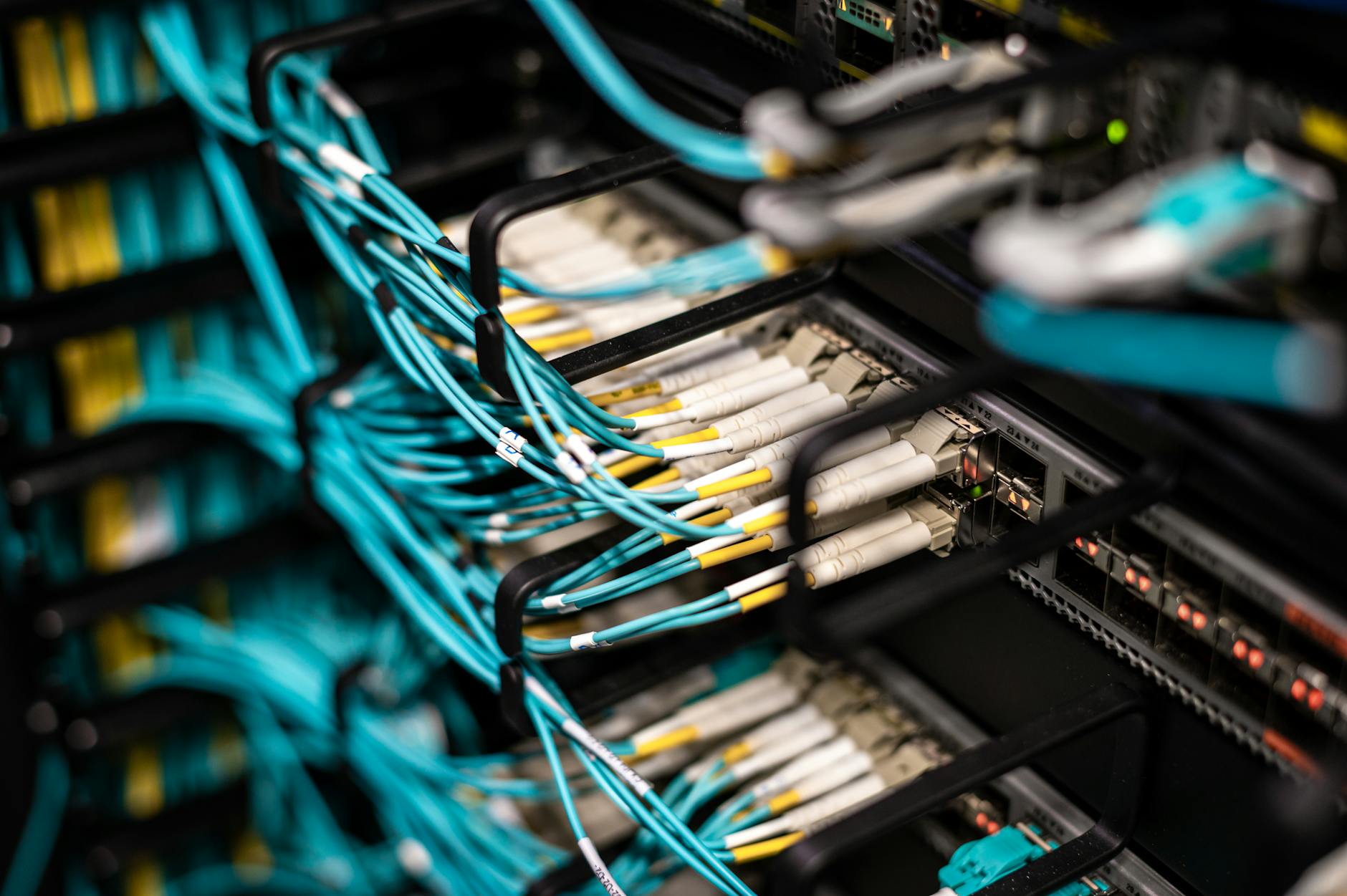
The research team successfully transmitted quantum-encrypted data over fiber optic networks connecting multiple CERN facilities. Each transmission created pairs of entangled photons that served as the foundation for generating encryption keys. When these photons reach their destinations, any unauthorized interference becomes immediately detectable because quantum measurements inevitably disturb the particles’ delicate states.
Dr. Sofia Vallecorsa, who leads CERN’s quantum computing efforts, explains that this technology addresses a critical vulnerability in current cybersecurity infrastructure. Traditional encryption relies on the assumption that certain mathematical problems are computationally difficult to solve, but quantum computers could eventually break these codes with ease.
The implications extend far beyond theoretical physics. Financial institutions currently spend billions annually on cybersecurity measures that quantum internet technology could render obsolete. Government communications, medical records, and corporate trade secrets would gain protection levels impossible to achieve through conventional means.
Real-World Applications Taking Shape
CERN’s quantum internet tests have already attracted attention from telecommunications companies and government agencies worldwide. The technology promises to revolutionize several industries where data security remains paramount.
Banking represents the most immediate application. Major financial institutions are closely monitoring CERN’s progress, recognizing that quantum-secured transactions could eliminate most forms of electronic fraud. Credit card information, wire transfers, and digital payments would become virtually impossible to intercept or manipulate.
Healthcare systems also stand to benefit significantly. Medical records contain some of the most sensitive personal information, yet current security measures often prove inadequate against sophisticated cyberattacks. Quantum internet technology would ensure that patient data remains completely secure during transmission between hospitals, insurance companies, and research institutions.
Military and diplomatic communications present another crucial use case. Government agencies require absolute certainty that sensitive information remains secure, especially when dealing with national security matters. Quantum internet networks would provide this assurance while enabling rapid, secure communication between global facilities.
Corporate espionage costs businesses hundreds of billions of dollars annually. Companies developing new technologies, pharmaceutical formulations, or strategic plans would gain unprecedented protection against competitors seeking to steal intellectual property.
Technical Challenges and Current Limitations
Despite these promising applications, quantum internet technology faces significant technical hurdles before widespread adoption becomes feasible. The current systems require extremely controlled conditions and specialized equipment that makes implementation complex and expensive.
Quantum states are notoriously fragile, easily disrupted by environmental factors like temperature fluctuations, electromagnetic interference, or physical vibrations. CERN’s tests required sophisticated isolation chambers and cooling systems to maintain the delicate quantum entanglement necessary for secure communication.
Distance limitations also present challenges. While CERN successfully demonstrated quantum communication within their facility network, extending these connections over intercontinental distances requires quantum repeaters – devices that can extend quantum signals without compromising their security properties. These repeaters remain largely theoretical, though several research teams are making progress toward practical implementations.
The infrastructure requirements are substantial. Quantum internet networks need specialized fiber optic cables, quantum transmitters, and receivers that cost significantly more than conventional networking equipment. Building a global quantum internet would require massive investments from telecommunications companies and governments.
Integration with existing communication systems presents additional complexity. Most organizations cannot simply replace their entire communication infrastructure overnight. Quantum internet technology must work alongside traditional networks during the transition period, creating potential security vulnerabilities at connection points.
The Race for Quantum Supremacy
CERN’s achievements occur within a broader global competition to develop practical quantum communication technologies. China has invested heavily in quantum research, successfully demonstrating satellite-based quantum communication over distances exceeding 1,000 kilometers. The United States has launched the National Quantum Initiative, allocating billions of dollars for quantum research and development.
Private companies are also making significant contributions. IBM, Google, and other tech giants have developed quantum computing platforms that complement quantum communication research. Startups focused specifically on quantum security are attracting substantial venture capital investment, indicating strong market confidence in the technology’s commercial potential.
The competitive landscape resembles the early days of the internet, when multiple organizations raced to establish technical standards and build supporting infrastructure. Just as biotechnology advances like CRISPR gene editing have revolutionized agriculture and medicine, quantum internet technology could fundamentally transform how we approach digital security.
Universities worldwide have established quantum research programs, training the next generation of scientists and engineers who will build tomorrow’s quantum internet. These educational initiatives ensure continued progress even as current technical challenges are gradually overcome.
Looking Toward a Quantum-Secured Future
CERN’s successful quantum internet tests mark the beginning of a new era in cybersecurity. While technical challenges remain, the demonstrated ability to create truly secure communication channels represents a breakthrough comparable to the invention of public key cryptography in the 1970s.
The timeline for widespread adoption depends largely on continued investment in research and infrastructure development. Industry analysts predict that quantum internet technology could begin appearing in high-security applications within the next decade, with broader commercial deployment following in the 2030s.
The societal implications are profound. In a world where data breaches regularly affect millions of people, quantum internet technology offers hope for truly private digital communications. From protecting personal information to securing critical infrastructure, these advances could restore public confidence in digital systems while enabling new forms of secure interaction.
As CERN continues refining their quantum internet systems, we stand on the threshold of a communications revolution that could make today’s cybersecurity concerns seem like distant memories from a more vulnerable digital age.
Frequently Asked Questions
How does quantum internet technology work?
It uses entangled particles that change state when observed, making any interception attempt immediately detectable by both sender and receiver.
When will quantum internet be available commercially?
Industry analysts predict high-security applications within a decade, with broader deployment expected in the 2030s.