



The fitness tracker market faces its biggest disruption yet. After dominating wrists for over a decade, these once-revolutionary devices are losing ground to an unexpected challenger: smart glasses. What started as augmented reality experiments has evolved into sophisticated health monitoring platforms that offer everything traditional fitness trackers do, plus capabilities that make wrist-worn devices look primitive.
The shift isn’t happening overnight, but early adopters and tech enthusiasts are already making the switch. Meta’s Ray-Ban smart glasses have incorporated basic fitness features, while newer entrants like the Vuzix Shield and Rokid AR glasses are pushing deeper into health territory. Unlike fitness trackers that require constant attention and arm movements to check data, smart glasses deliver health insights directly into your field of vision without breaking stride or interrupting conversations.

The Evolution Beyond Wrist-Based Monitoring
Smart glasses represent a fundamental shift in how we think about health monitoring. Traditional fitness trackers excel at measuring heart rate, steps, and sleep patterns, but they’re limited by their single point of contact on the wrist. Smart glasses leverage multiple sensors positioned around the head and face, areas rich with blood vessels and close to vital organs.
The technology has reached a tipping point where smart glasses can monitor eye movement patterns to detect fatigue, measure subtle changes in facial temperature that indicate stress or illness onset, and even track posture through head positioning data. Companies like Focals (before its acquisition by Google) and current players like Vuzix are developing glasses that monitor everything from UV exposure to air quality, providing a more comprehensive health picture than any wrist device could offer.
Battery life, once the Achilles heel of smart glasses, has improved dramatically. Current models like the latest generation Ray-Ban Stories can operate for 6-8 hours of continuous use, sufficient for most daily activities. More importantly, the charging cases provide multiple full charges, similar to how AirPods revolutionized wireless audio by solving the battery problem through clever engineering.
Superior Data Collection Through Facial Monitoring
The human face contains a wealth of health information that fitness trackers simply cannot access. Smart glasses positioned near the temples can detect pulse variations through tiny cameras that monitor blood flow beneath the skin. This photoplethysmography (PPG) technology, the same principle used in pulse oximeters, provides more accurate heart rate readings than wrist-based sensors, which often struggle with movement artifacts and poor contact.
Eye tracking opens entirely new categories of health monitoring. Rapid eye movement patterns can indicate cognitive load, stress levels, and even early signs of neurological conditions. Some smart glasses can detect micro-expressions and facial tension that correlate with pain levels or emotional states, data points impossible to capture with traditional fitness trackers.
Environmental health monitoring represents another significant advantage. Smart glasses naturally sit at face level where we breathe, making them ideal platforms for air quality sensors. They can detect pollen counts for allergy sufferers, monitor UV exposure more accurately than wrist devices (which are often covered by clothing), and even measure ambient noise levels that affect hearing health and stress.

The Integration Advantage
Smart glasses excel at contextual health monitoring in ways fitness trackers cannot match. While fitness trackers interrupt daily activities with buzzing notifications, smart glasses provide seamless health updates through peripheral vision displays. You can see your current heart rate zone during a workout without lifting your wrist or losing focus on your form.
The integration extends to preventive health measures. Smart glasses can remind you to take breaks based on eye strain detection, suggest posture corrections through gentle visual cues, or alert you to hydration needs based on environmental conditions and activity levels. This proactive approach moves beyond the reactive nature of most fitness tracker notifications.
Privacy concerns that have plagued fitness trackers are being addressed more thoughtfully in smart glasses development. Many models process health data locally rather than transmitting everything to cloud servers. The visual interface allows users to see exactly what data is being collected and shared, providing transparency that small fitness tracker screens cannot match.
The connection to advanced sensor technology in wearables shows how the entire category is evolving beyond simple step counting toward comprehensive health monitoring ecosystems.
Market Dynamics and Consumer Adoption
The transition from fitness trackers to smart glasses reflects broader consumer preferences for multi-functional devices. Younger demographics increasingly reject single-purpose gadgets in favor of platforms that combine entertainment, communication, productivity, and health monitoring. Smart glasses represent the convergence of these needs in a form factor that doesn’t require additional wrist real estate.
Price points are converging rapidly. High-end fitness trackers from Fitbit, Garmin, and others now cost $200-400, while entry-level smart glasses with health monitoring capabilities start around $300-500. The value proposition becomes compelling when smart glasses replace both fitness trackers and potentially reading glasses, sunglasses, or even headphones.
Enterprise adoption is accelerating the technology development. Companies are piloting smart glasses for employee wellness programs, using the devices to monitor stress levels, promote ergonomic awareness, and track environmental health factors in workplaces. This B2B adoption provides the scale and funding necessary for rapid technological advancement.
The integration with existing health ecosystems like Apple Health, Google Fit, and Samsung Health ensures that switching from fitness trackers doesn’t mean losing historical data or breaking established wellness routines. Smart glasses simply become a more sophisticated data collection endpoint in familiar health management workflows.
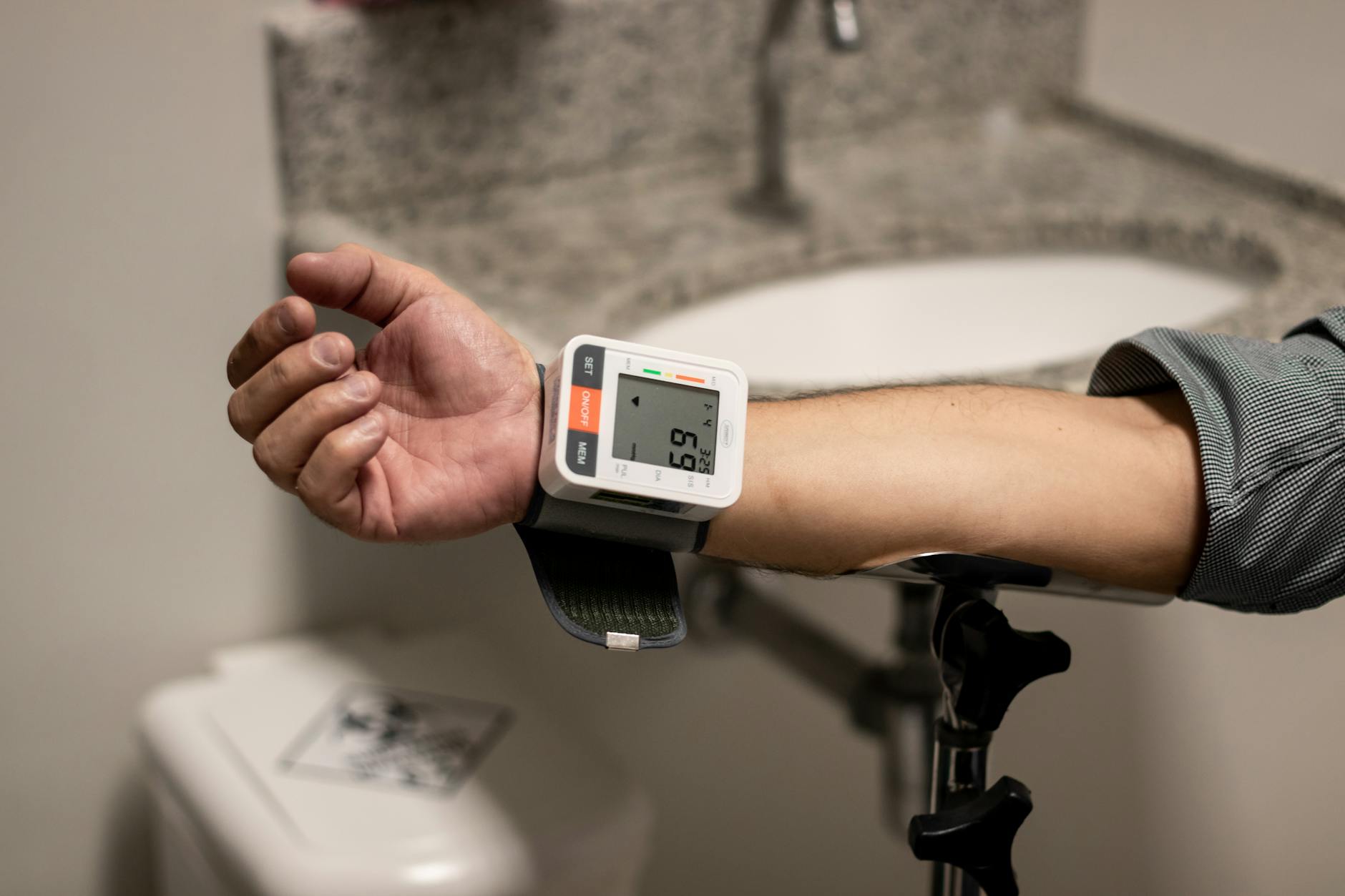
The future of personal health monitoring clearly points toward ambient, contextual devices that integrate seamlessly into daily life rather than requiring dedicated attention and interaction. Smart glasses represent the next evolution of this trend, offering superior data collection capabilities, more natural user interfaces, and broader functionality than traditional fitness trackers can provide.
As the technology continues to mature and prices become more accessible, smart glasses will likely follow the same adoption curve that smartphones used to replace multiple single-purpose devices. The question isn’t whether smart glasses will replace fitness trackers, but how quickly consumers will recognize that the future of health monitoring sits on their nose, not their wrist.
Frequently Asked Questions
How do smart glasses monitor health better than fitness trackers?
Smart glasses use facial sensors and eye tracking to monitor heart rate, stress levels, and environmental factors more accurately than wrist-based devices.
Are smart glasses more expensive than fitness trackers?
Entry-level smart glasses with health features cost $300-500, comparable to high-end fitness trackers, but offer additional functionality beyond health monitoring.